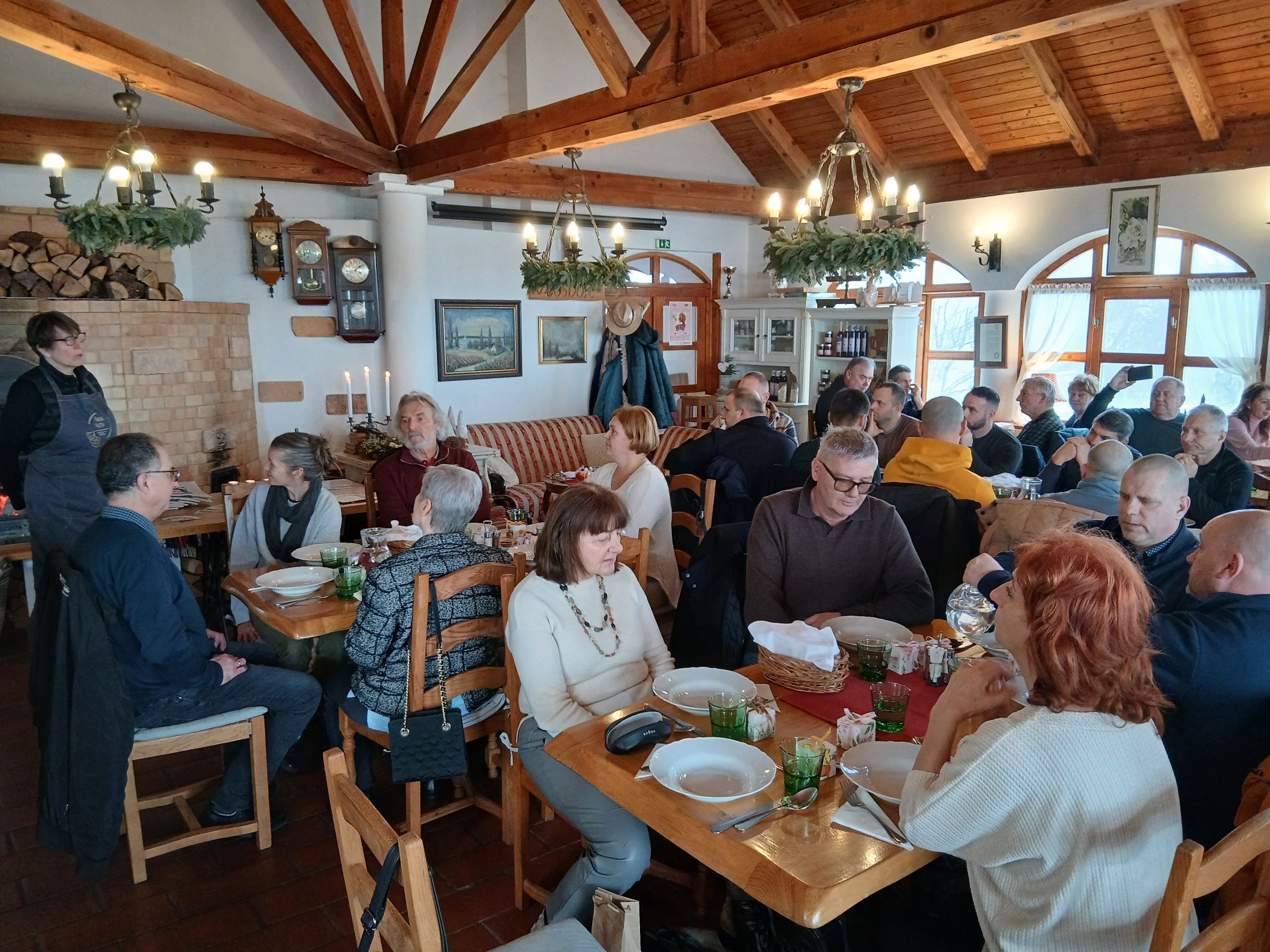
The study tour jointly organized by the Innovation and Digitalization Support Unit (ITE), the Rural and Regional Development Support Unit (VTE), the Slovakian Bioeconomy Cluster and Chamber of Agriculture, held between January 27–29, 2026, demonstrated that short supply chains (SSCs) function best when they are built on living relationships, honest experience-sharing, and cooperative farming communities.
The program was attended by 45 Hungarian farmers and producers from the Southern-Slovakia, joined by an additional 15 Hungarian participants from the domestic SSC network. This deliberately designed professional composition created an exceptional opportunity for cross-border exchange of experience and direct professional dialogue.
At locations in the Balaton Uplands and Zala County, participants were introduced to functioning, well-tested best practices: family businesses, open farms, hospitality and retail models based on local products and direct sales.
Speaking Honestly About Successes – and Challenges Too
One of the greatest strengths of the study tour was that the presenters did not portray an idealized picture.
They spoke openly about:
- initial uncertainties,
- difficulties in accessing markets, and
- the decisions that ultimately led to success.
This direct, personal approach sparked genuine dialogue among farmers and provided participants with tangible, practical knowledge.
A Local Economy Strengthened Through Community
The best practices of the Zala Valley Open Farm Network and the Éltető Balaton Uplands Network clearly demonstrated that SSCs are not merely a form of sales, but a trust-based collaboration. Producers recommend each other’s products, purchase from one another, and think collectively about the future.
The study tour reaffirmed that honest knowledge-sharing, personal relationships, and cross-border professional cooperation play a key role in the long-term, sustainable development of regional economies.