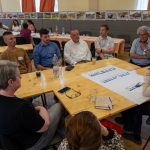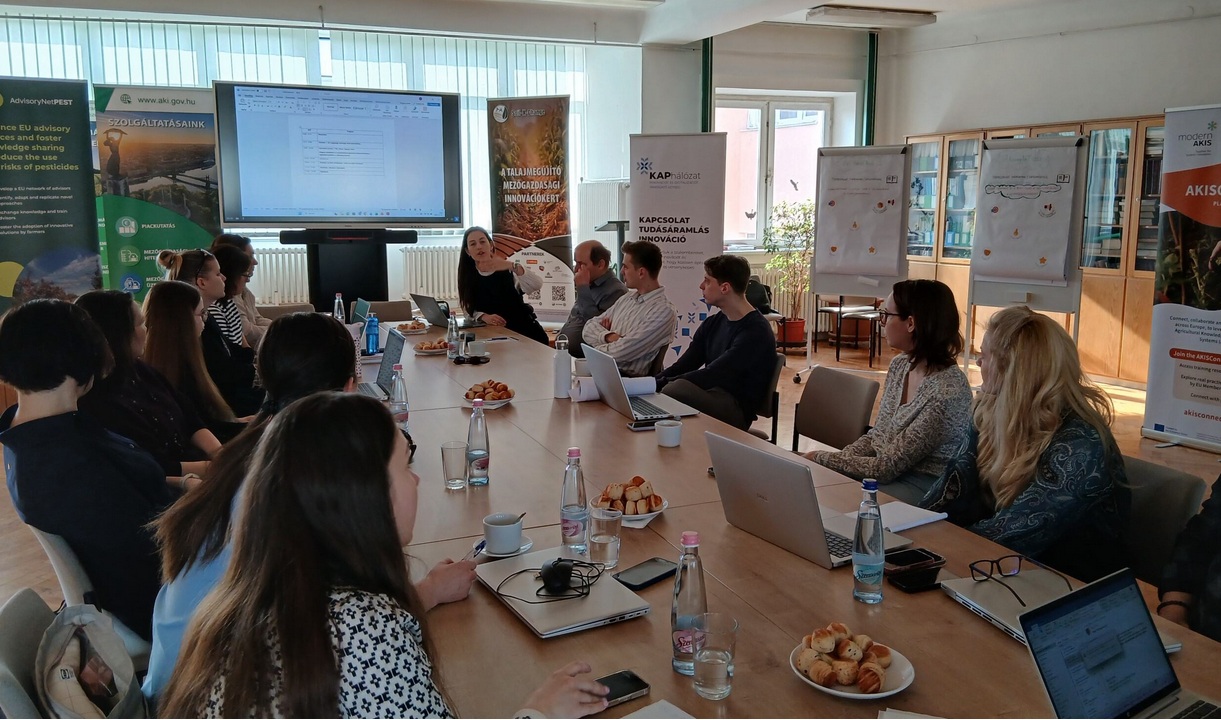
On 10 March 2026, colleagues from the Innovation and Digitalisation Support Unit (ITE), the Green Support Unit (ZTE), the Rural and Regional Development Support Unit (VTE), and the Ministry of Agriculture held a joint capacity-building workshop within the framework of the modernAKIS project. The aim of the professional meeting was to strengthen joint professional thinking related to the Agricultural Knowledge and Innovation System (AKIS) and to support the more effective use of knowledge generated within different projects.
In the first part of the workshop, the modules of the modernAKIS e-learning course were presented in detail. These modules introduce the systemic approach, functioning, and development opportunities of AKIS. Among other topics, the modules address the importance of a comprehensive AKIS perspective, understanding the actors of the system and their relationships, methods for AKIS diagnosis, the significance of interactive innovation, and the conditions required for the successful implementation of a well-functioning AKIS.
The aim of the learning materials is to support stakeholders in the agricultural sector in strengthening cooperation-based innovation and knowledge sharing through practical examples.
The second part of the programme focused on the possibilities of monitoring and evaluating the AKIS system. The presentation introduced a systemic approach to AKIS evaluation, as well as the methods and tools that can be used to analyse knowledge flows, cooperation among actors, and the effectiveness of innovation processes. The presentation also covered aspects of structural, functional, and capacity-based analysis of AKIS.
Participants also engaged in a joint workshop session to explore ways of disseminating the results and knowledge generated in various international projects. During the discussions, ideas and proposals were developed for disseminating results from four projects: EU-FarmBook, AdvisoryNetPest, ATTRACTISS, and modernAKIS.
The workshop generated several useful reflections and practical ideas that may contribute to ensuring that the knowledge created within these projects reaches a wider range of stakeholders in the agricultural sector. Participants expressed their hope that the ideas formulated during the workshop will lead to tangible collaborations and further professional steps in the coming weeks.