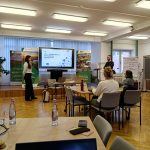
On 17 March 2026, the 32nd Plant Breeding Scientific Conference was held at the headquarters of the Hungarian Academy of Sciences. At the event, Zsuzsa Molnár, Head of Department at the Institute of Agricultural Economics (AKI), delivered a plenary presentation entitled “The Economic Impact of Plant Breeding”.
A key message of the presentation was that plant breeding is a long-term, resource-intensive investment with slow returns, while the benefits of the resulting products (varieties and hybrids) materialise across multiple levels and among a wide range of stakeholders.
- The rapid market uptake of successful varieties/hybrids can establish the long-term market position of breeding institutions and seed companies, while also strengthening the competitiveness of the sector.
- The use of high-yielding and more stable varieties and hybrids enables higher and more balanced profitability, thereby enhancing farmers’ resilience.
- At the same time, higher yields contribute to increased output in arable crop production, export growth, and more efficient land use, supporting overall economic performance and food security at the national level.
The presentation also highlighted that the external impacts of plant breeding are often indirect and difficult to quantify, yet highly significant. Estimating and analysing the economic, environmental, and social impacts of basic research is therefore essential for evidence-based policy decisions.