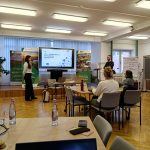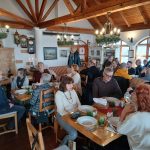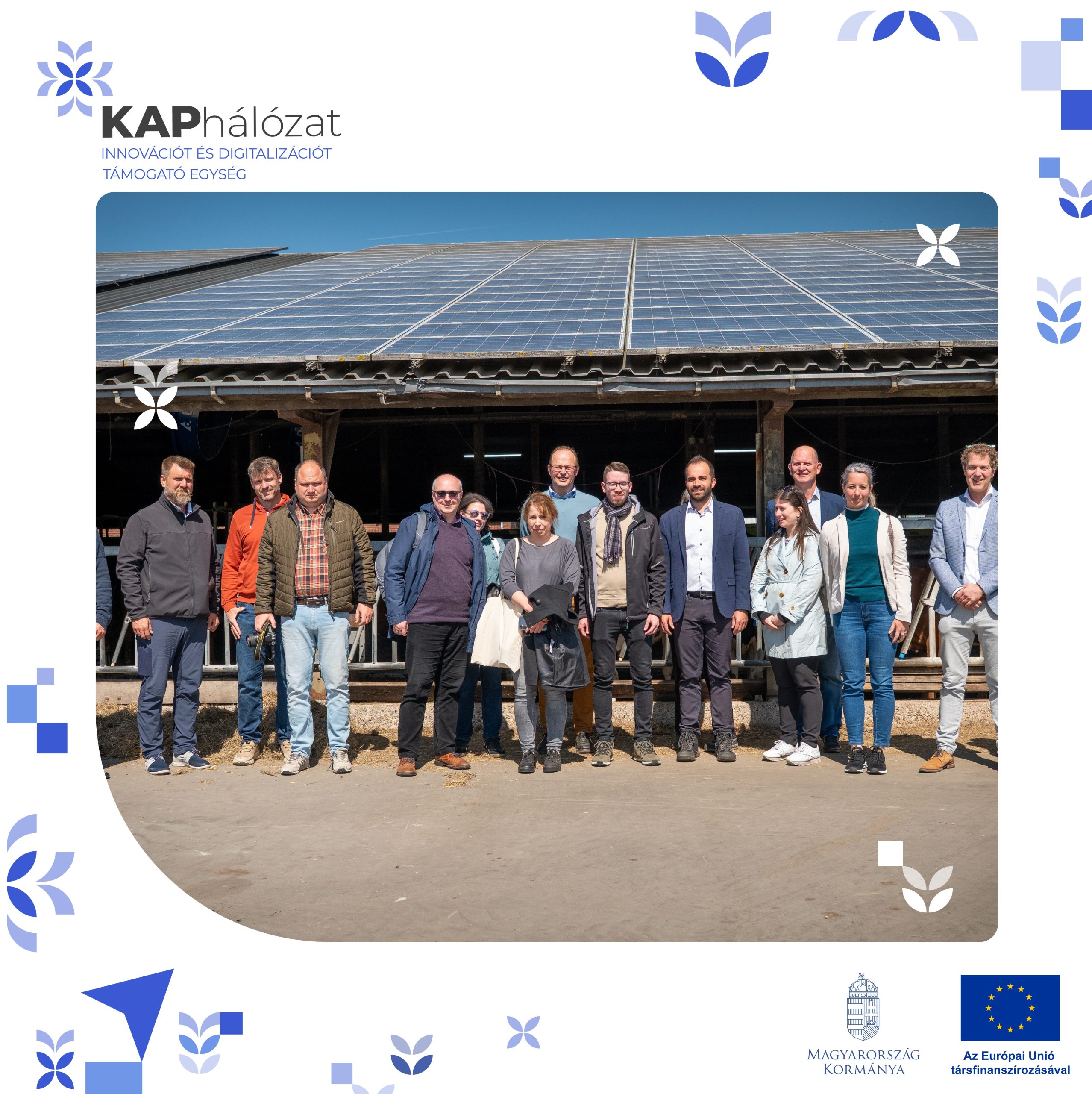
During the Dutch study tour on sustainable agricultural water management organised by ITE, participants gained a comprehensive overview of how a well-structured, cooperation-based water management system works in practice.
The three-day programme was attended by a delegation consisting of experts from ITE and the Ministry of Agriculture, as well as farmers, who were able to explore Dutch best practices from both a theoretical and practical perspective.
Holistic Approach: Alignment of Climate, Soil, and Water – for Decision-Makers
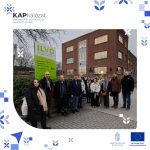
On the first day, the delegation visited the Dutch Ministry of Agriculture, Fisheries, Food Security and Nature, where they gained insights into the interconnections between climate adaptation, soil management, and water protection. A key focus was the Climate Adaptation Program (Delta Programme), which serves as a strategic foundation for agricultural water management aiming to decrease agricultural water use.
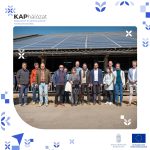
In the afternoon, participants visited a family farm where they were introduced to practical solutions in crop rotation and regenerative farming. The examples clearly demonstrated how soil water retention capacity can be improved and agricultural production more sustainable.
A System Built on Cooperation – Between Farmers, Authorities, and Municipalities
The second day focused on the Dutch water management model. The delegation visited a water authority, where they learned about a centuries-old system based on cooperation.
In the Netherlands, water management is not the responsibility of a single organisation: various stakeholders, including farmers, actively participate in decision-making. The system is based on the “polluter pays” principle and shared responsibility. Decisions rely on real-time data, enabling rapid responses to challenges such as floods and droughts.
In the afternoon, participants visited an innovative farm focusing on the future of plant-based protein production, showcasing a local value chain built around lupine cultivation. The programme concluded at Wageningen University, where participants explored the future interconnections between water security, land use, and agriculture through innovative approaches.
Innovation in Practice
The third day of the study tour focused on complex, system-based solutions. Participants visited the Farm of the Future project site, where “field lab” conditions are used to test solutions for the challenges of sandy soils – such as water scarcity, soil degradation, and nutrient loss. The presented approaches focus on the integrated management of irrigation, water systems and nutrient supply.
In the afternoon, an innovation centre dealing with peatlands highlighted climate-related challenges. The aim is to develop solutions that reduce significant CO₂ emissions while maintaining economically sustainable farming.
Key Takeaways
The main message of the study tour is that sustainable agricultural water management can only be achieved through cooperation-based systems. Integrated management of water, soil, and farming systems, as well as close collaboration between stakeholders are essential for long-term success.
The final conclusion of the programme is clear: true innovation emerges where research meets practical experience.